

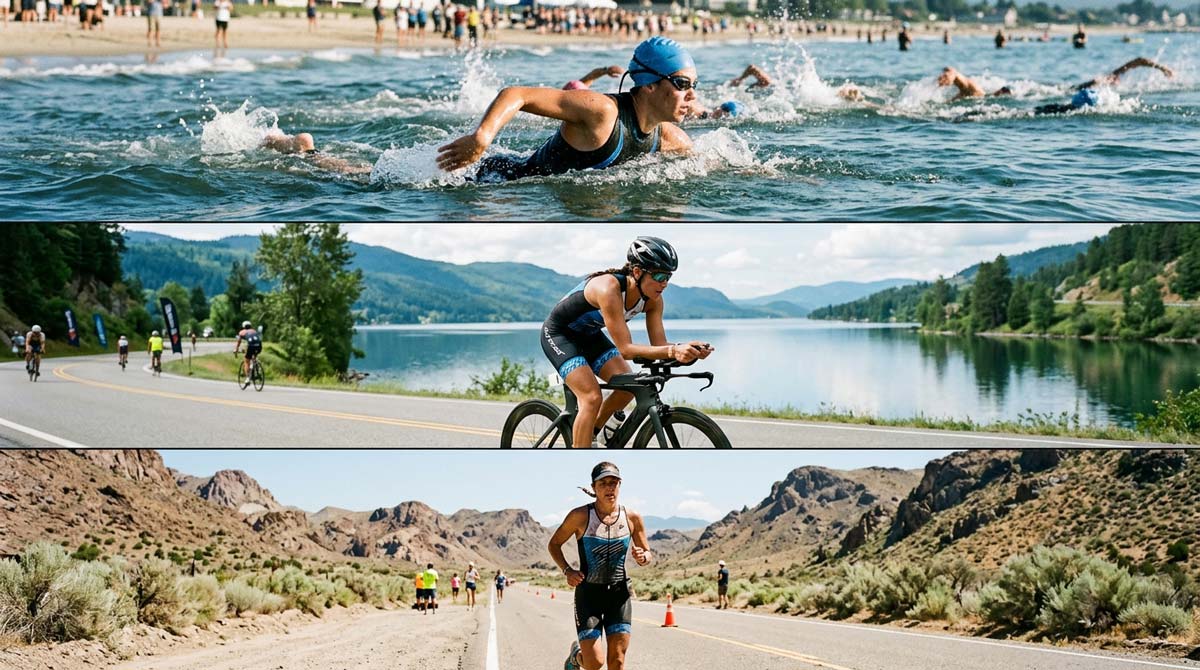
Coast, lake, or desert: how your strategy changes for each type of triathlon
Not all triathlons are competed in the same way.
Even if the distance is the same, the environment completely changes the experience: swimming in the sea is not the same as swimming in a lake, nor is cycling in humidity the same as cycling against desert wind.
In April, the calendar in Mexico makes this clear: you can encounter completely different conditions in a matter of weeks.
Understanding these differences not only improves your performance. It avoids mistakes that can cost you the entire competition.
1. Coastal Triathlon: humidity, heat, and control
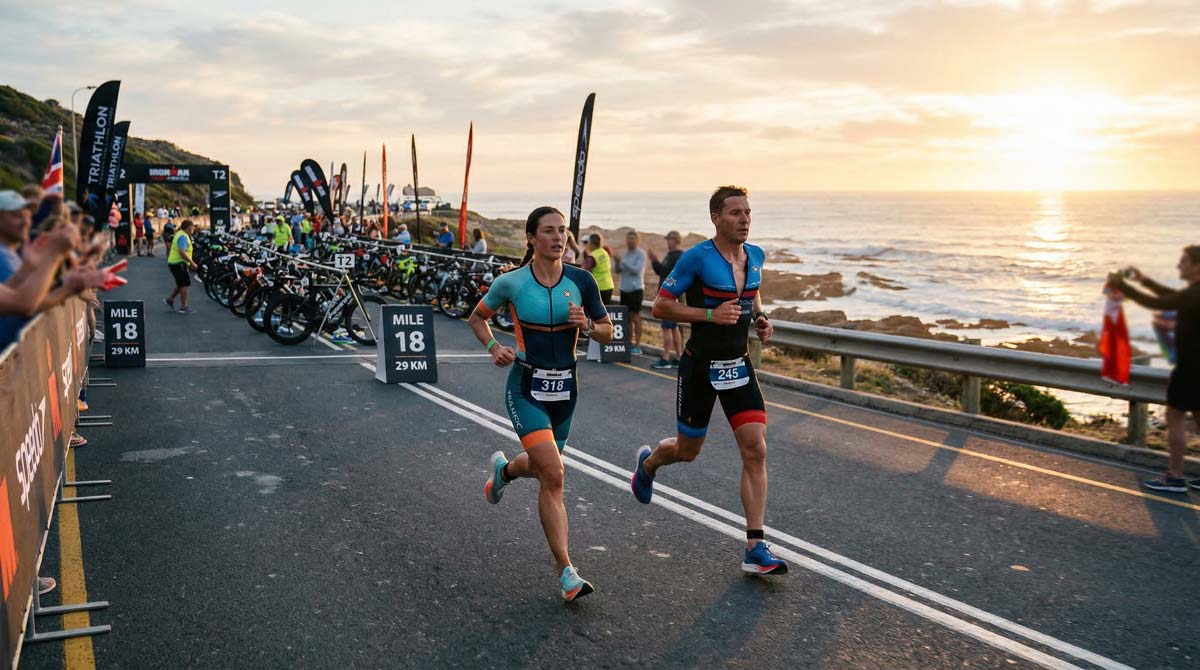
Beach events, such as the Terramar Veracruz Triathlon 2026 , share clear characteristics:
- High humidity
- Constant temperatures
- Open water swimming
The main challenge here is not the distance. It's heat management.
The body cools less effectively, heart rate rises faster, and hydration becomes critical.
Strategic key: start controlled and maintain constant hydration from the beginning.
2. Lake Triathlon: pace and effort reading
Competitions such as the Tequesquitengo Triathlon 2026 offer a more stable environment, but not necessarily an easier one.
- More controlled swimming
- Less swell
- Warm, but drier climate
The most common mistake here is overconfidence.
Without such aggressive factors as the sea or wind, many athletes start stronger than they should.
Strategic key: maintain pacing discipline and don't get carried away by the feeling of "ease."
3. Desert Triathlon: wind, heat, and mental endurance
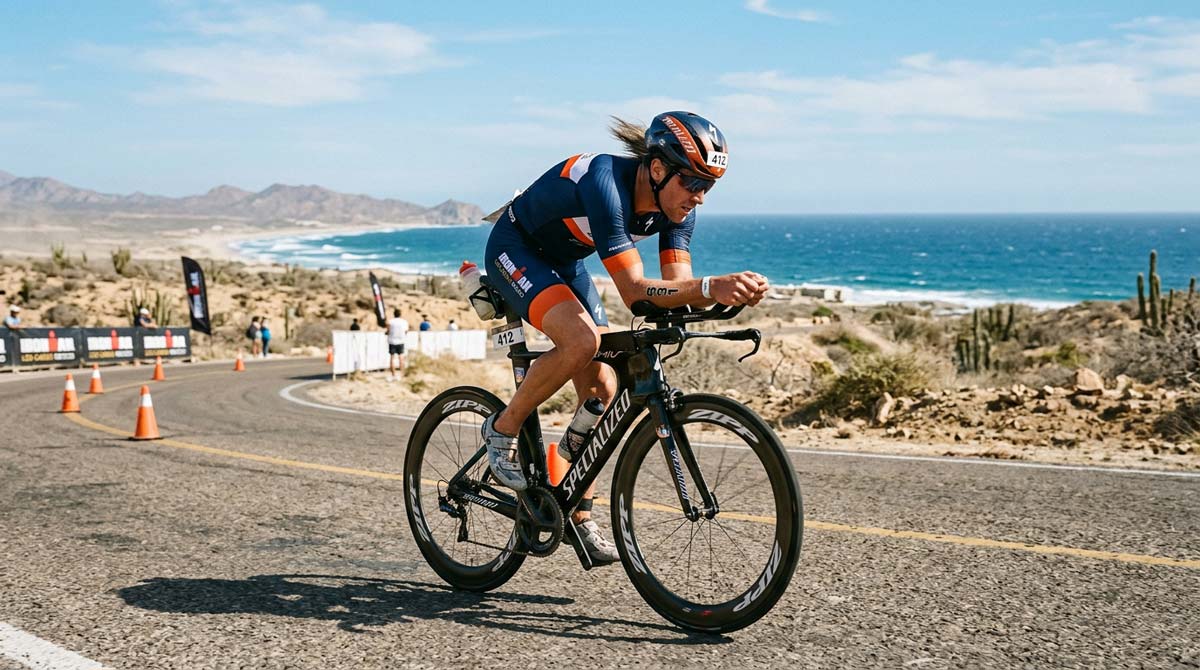
Events such as the Ironman 70.3 Los Cabos raise the demands to another level.
- Constant wind
- Dry heat
- Long and exposed segments
Being in shape is not enough here. You need strategy.
The wind breaks the rhythm, wears you out more than it seems, and demands mental control.
Strategic key: maintain consistency and don't fight against the conditions.
4. The difference is not in the distance, it is in the environment
A sprint on the coast can feel harder than an Olympic distance in a lake. A 70.3 in the desert can demand more than the same race in controlled conditions.
Therefore, it's not just about preparing for the distance. It's about preparing for the environment.
5. Equipment must adapt to the type of race
Conditions change, and what you wear should too.
- On the coast: light and breathable fabrics
- In the lake: comfort and precise fit
- In the desert: aerodynamics and efficiency
When the environment demands more, you need everything else to work in your favor.
Competing better means understanding where you are competing
Not all triathlons are won with more strength. Many are won with a better understanding of the environment.
This 2026 season is not about imposing your pace in all races. It's about adapting it.
See you at the starting line.
— KUMI Team
The environment changes. Your equipment should too.
At KUMI, we design our trisuits with Mexico's real triathlon in mind: heat, humidity, wind, and long distances. Because competing well is not just about training... it's also about choosing what accompanies you in each type of race.

Leave a comment
This site is protected by hCaptcha and the hCaptcha Privacy Policy and Terms of Service apply.